The Daily Habits That Actually Move Digestion
Ranked by how much difference each makes. A supplement appears near the bottom of the list, and that is not an accident.
What Changes Digestion, With Sodatide™ Placed in Order
This article argues against buying supplements, which is a strange thing to publish on a site that recommends one. It is also true, so here it is.
Digestive comfort and regularity respond to a short list of inputs. Ranked by how much difference each makes, a capsule is not near the top.
First: fibre from food
Not close. Guidance sits around 25 to 38 grams a day depending on age and sex; typical intake runs at roughly half. Closing that gap changes transit time, stool consistency, how long fullness lasts and how much fermentation happens at all.
For scale: a cup of cooked lentils supplies 12 to 15 grams. A cup of raspberries, about 8. An unpeeled pear, around 5. A bowl of oats, roughly 4. Two or three of those in a day outperforms anything sold in this category.
Second: water
Adding fibre without fluid is the commonest way people make constipation worse while trying to fix it. Fibre works by holding water. This is also exactly why gel-forming fibre supplements specify a full glass.
Third: movement
Activity speeds transit. It does not need to be exercise in any formal sense — a walk after dinner is measurably useful.
Fourth: how you eat
Eating quickly means swallowing air, an underrated cause of bloating. So do fizzy drinks, chewing gum and drinking through a straw. Unglamorous, and it works.
Fifth: sleep and stress
The gut-brain connection is not a wellness slogan. Stress alters motility and sharpens symptom perception; poor sleep worsens both. This is why stress management appears in clinical guidance for IBS rather than as an optional extra.
Sixth: fermented foods
Live yoghurt, kefir, sauerkraut, kimchi and miso deliver live organisms in variety and quantity no capsule matches, usually for less money.
Seventh, and only then: a supplement
At the margin, after the above. That is a smaller role than any product page implies, and an honest one.
When Symptoms Need a Clinician Rather Than Sodatide™
Some things are not supplement territory. Blood in the stool, unexplained weight loss, abdominal pain that persists, a lasting change in bowel habit, difficulty swallowing, or symptoms that wake you at night all warrant proper assessment.
Persistent bloating in particular has causes worth identifying. Coeliac disease routinely goes unrecognised for years and is diagnosed with a blood test, not by experimenting in the supplement aisle.
What Sodatide™ is not
It is not a treatment for anything. Not for obesity, not for diabetes, not for insulin resistance, and not for any digestive disorder. Nothing on this site should be read as suggesting otherwise, and nothing here is individualised medical advice.
Some symptoms need a clinician rather than a supplement. Unexplained weight loss, abdominal pain that persists, blood in the stool, a lasting change in bowel habit, or difficulty swallowing all warrant proper assessment. So does fatigue that will not lift, which has causes a blood test can identify.
If you are managing blood sugar, that belongs to you and your doctor together. Never alter prescribed medication because of anything you read on a supplement page.
Applying This to Sodatide™
Everything above holds for any product in this category. Applied to this one, the pages worth reading are the ingredient guide, which sets out what is disclosed and what is not, how it works, and the FAQ.
More From the Sodatide™ Journal
Start Your Sodatide™ Daily Wellness Routine
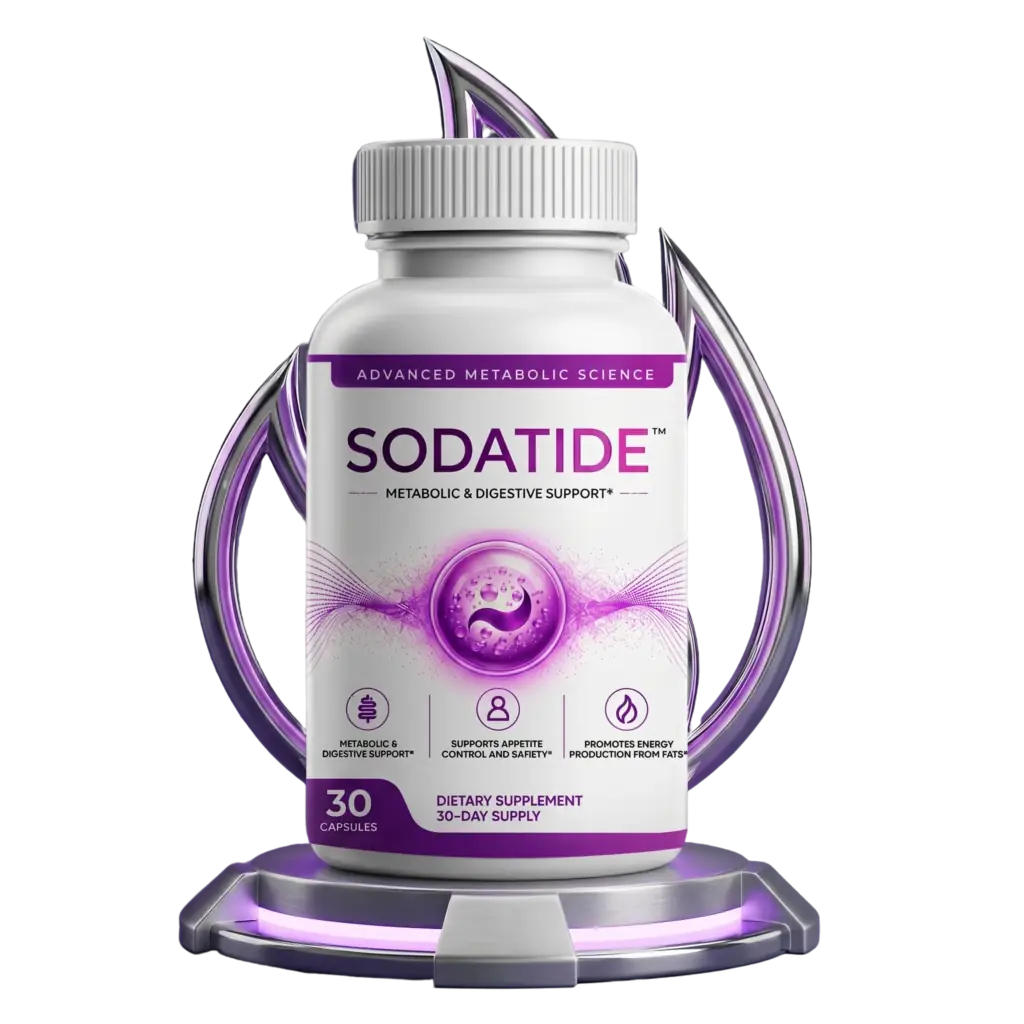
One capsule a day, taken with a full glass of water alongside your largest meal. Four disclosed ingredients, no stimulants, and a 60-day satisfaction guarantee behind the purchase.
Read the ingredient guide first. It sets out what each ingredient is studied for and, just as importantly, what this site could not verify about the formula.
- Once daily · 30 capsules per bottle
- Stimulant-free formula
- 60-day satisfaction guarantee